
We built SENAITY because we needed it ourselves.
After years of working with laboratories running SENAITE LIMS, we kept seeing the same pattern: lab managers opening multiple browser tabs, clicking through sample listings, trying to piece together where things stand. Which samples are overdue? What is stuck in verification? Did that urgent batch get published? The information is all in SENAITE, but getting a quick overview takes too many clicks.
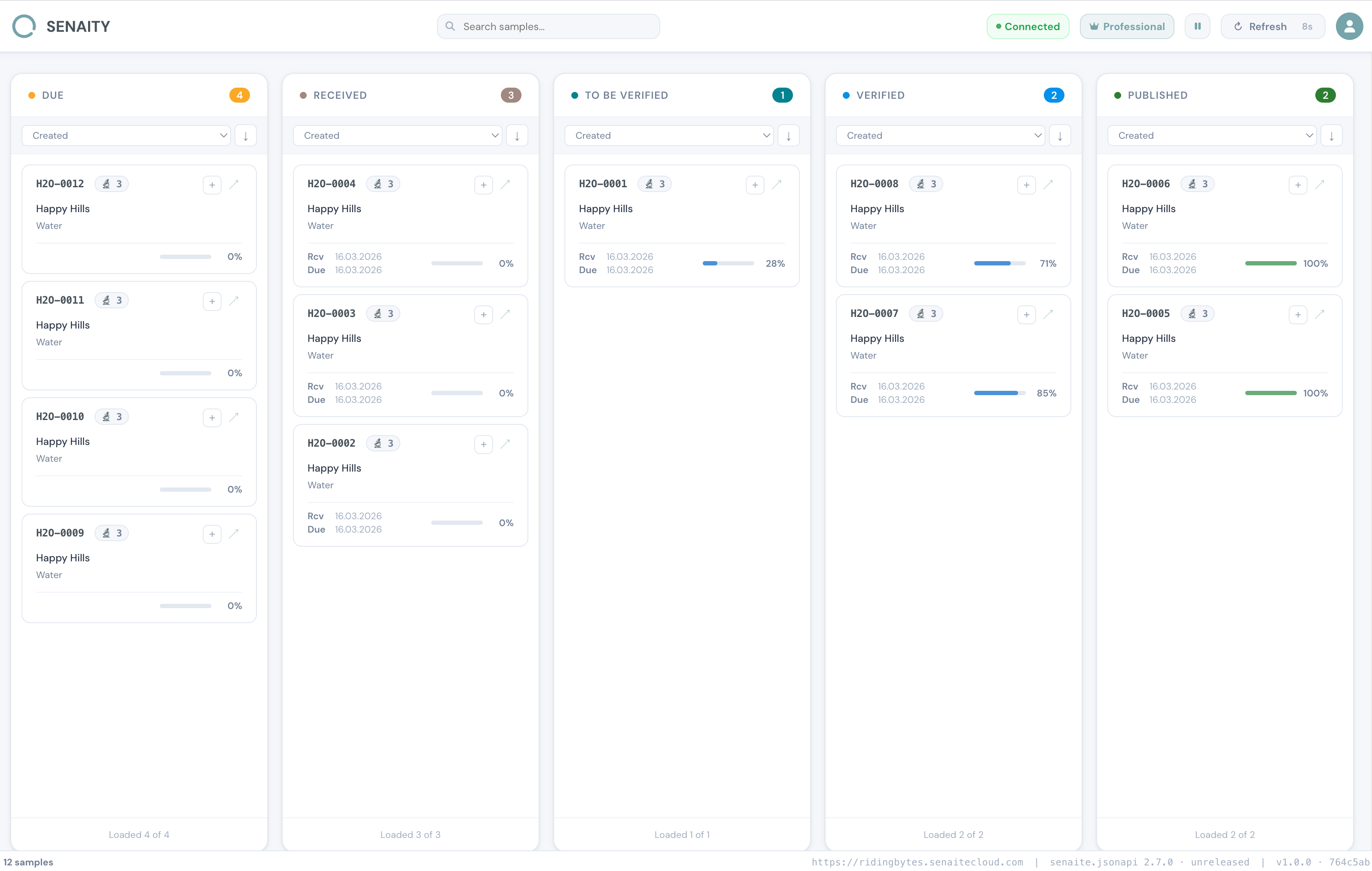
SENAITY fixes that. It is a fast, modern frontend that connects to your existing SENAITE instance and gives you a real-time Kanban board of your sample pipeline.
What SENAITY Does
SENAITY is not a replacement for SENAITE. It is a companion that sits on top of your existing installation and provides a visual overview that SENAITE does not have out of the box.
Here is what you get:
- Kanban board with columns for every sample state — Due, Received, To be Verified, Verified, Published. Auto-refreshes every 30 seconds.
- Full-text search across all your samples. Type a client name, a sample ID, or a batch number and get instant results.
- Dynamic filters that automatically discover your custom catalog indexes. If you added a custom field to SENAITE, SENAITY will find it and let you filter by it.
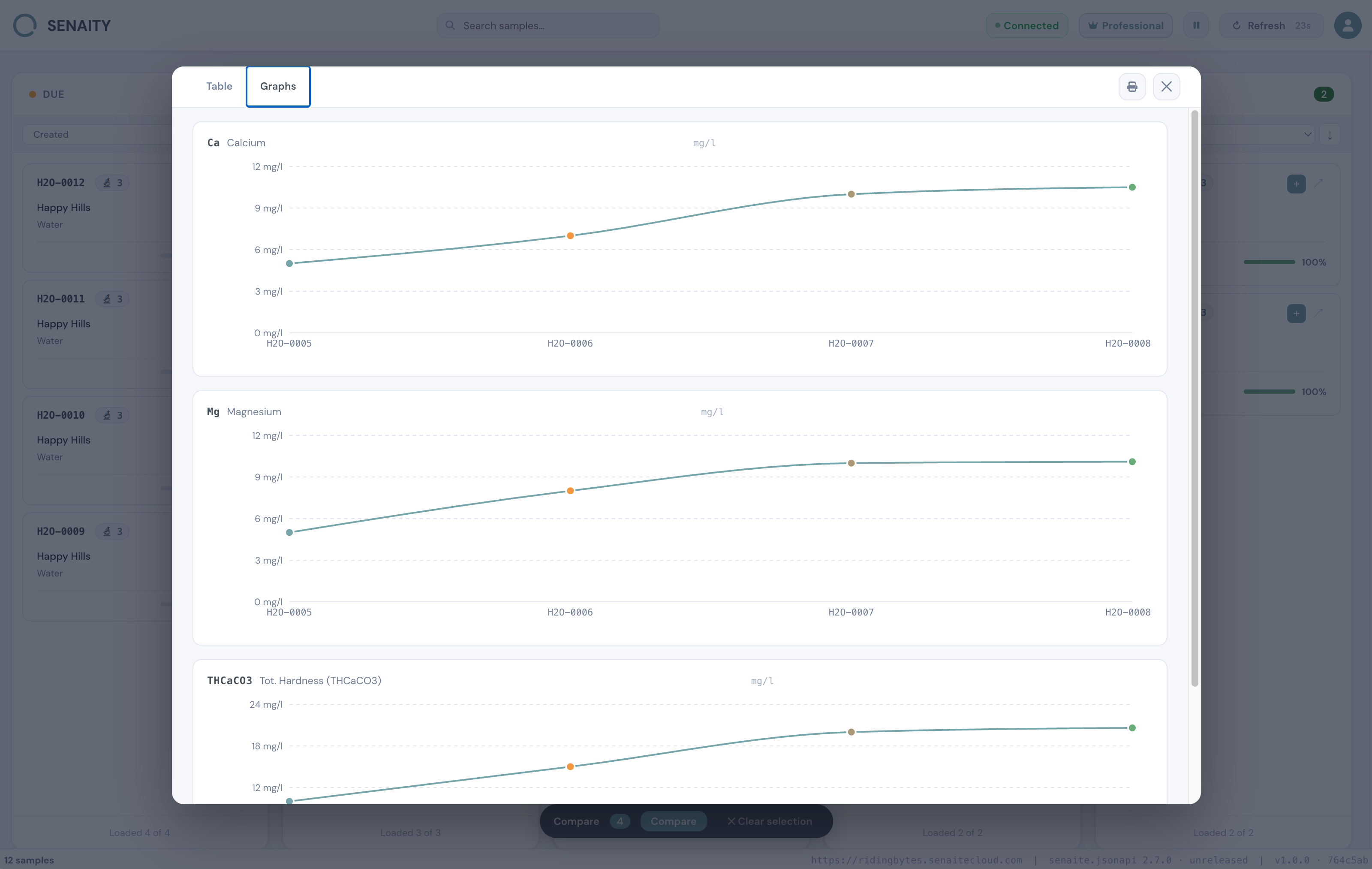
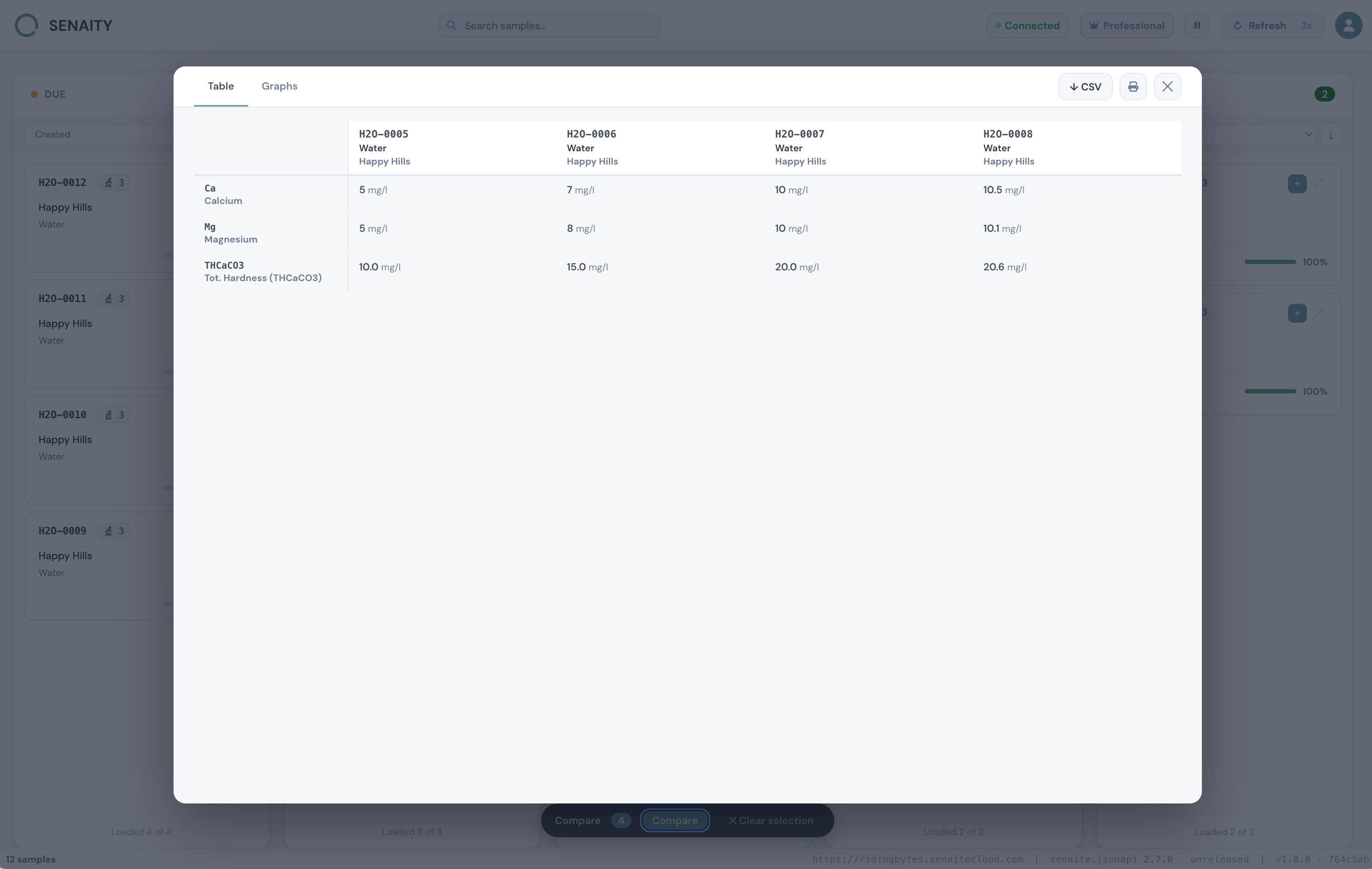
- Sample comparison — select multiple samples and compare their results side by side. SENAITY calculates %RSD, renders distribution charts, and generates Z-score analysis. Export everything as XLSX.
- Anomaly detection using machine learning (Isolation Forest). SENAITY learns what normal looks like for each analysis type and flags suspicious results automatically. No manual thresholds to configure.
- Scientific notation — results are rendered with proper superscripts, uncertainty values, and unit formatting. The way lab professionals expect to read their data.
Why We Built It
SENAITE is a powerful system. It handles complex laboratory workflows, supports configurable sample types, manages instruments, and tracks every result with full audit trails. But its interface was designed for data entry and management, not for monitoring.
Lab managers do not need to register samples or enter results most of the time. They need to know: are we on track? Is anything stuck? Are there anomalies? That is what SENAITY is for.
We also wanted something that works on a tablet or phone. Check the lab status from a meeting, from the floor, or from home. SENAITY is fully responsive with dark and light mode.
How It Works
SENAITY connects directly to your SENAITE instance via the JSON API. You sign in with your existing SENAITE credentials — no new accounts, no separate user management.
Setup takes less than five minutes: point SENAITY at your SENAITE URL, log in, and you are looking at your live data. Nothing is copied or stored outside of SENAITE. If you cancel SENAITY, your data stays exactly where it was.
Plans and Pricing
We offer a free tier so you can try it without any commitment. No credit card, no demo call — just sign up and connect.
- Free — last 7 days of samples, Kanban board, search. Free forever.
- Starter (EUR 19/month) — 90 days of samples, comparison, XLSX export, analysis drawer.
- Professional (EUR 49/month) — unlimited samples, anomaly detection, distribution charts, heatmaps, scientific notation.
- Enterprise (on request) — self-hosted with Docker Compose, unlimited SENAITE instances, custom branding, dedicated support, SLA.
All paid plans are handled through Stripe. No invoices to chase, no purchase orders — subscribe and go.
Try It
Head over to senaity.com and create a free account. You will have a working dashboard in under five minutes.
If you have questions or want to discuss Enterprise self-hosting, get in touch. We are also on the SENAITE Community Forum.

Ramon
Related Posts
We built SENAITY because we needed it ourselves. After years of working with laboratories running SENAITE LIMS, we kept seeing the same pattern: lab managers opening multiple browser tabs, clicking through sample listings, trying to piece together where things stand. Which samples are overdue? What is stuck in verification? Did [...]
Choosing a LIMS is a long-term decision. Most laboratories run their LIMS for 10 to 15 years before replacing it. That makes the initial choice important — not just in terms of features, but in terms of cost, flexibility, and control. This post compares SENAITE LIMS (open source) with typical [...]
