Update, October 2026: SENAITY continues as SENAITE Data Lens. The hosted demo at senaity.com shuts down on 31 October 2026. The plans and prices this post originally listed are no longer offered.
We announced SENAITY in April 2026 as a quality layer next to SENAITE. This post now describes what it did, why we changed course, and what you can use today instead.
The problem it addressed
A lab that verifies thousands of results a week relies on the verifier noticing the one value that does not fit. Specifications catch results outside a fixed range. They do not catch a result that sits inside the range but is unusual for this client, this sample type and this analysis. That second kind of error is the one a tired reviewer misses.
What SENAITY did
SENAITY read results from SENAITE over the JSON API and never stored laboratory data itself. Three functions:
- Anomaly detection. For each analysis keyword it trained an Isolation Forest model on the lab’s own verified and published results, separately per client and sample type, and flagged new results that did not fit that history. Sensitivity could be set per analysis.
- A review board. Samples in flight by workflow state, with the analyses of a sample and their flags shown in one place.
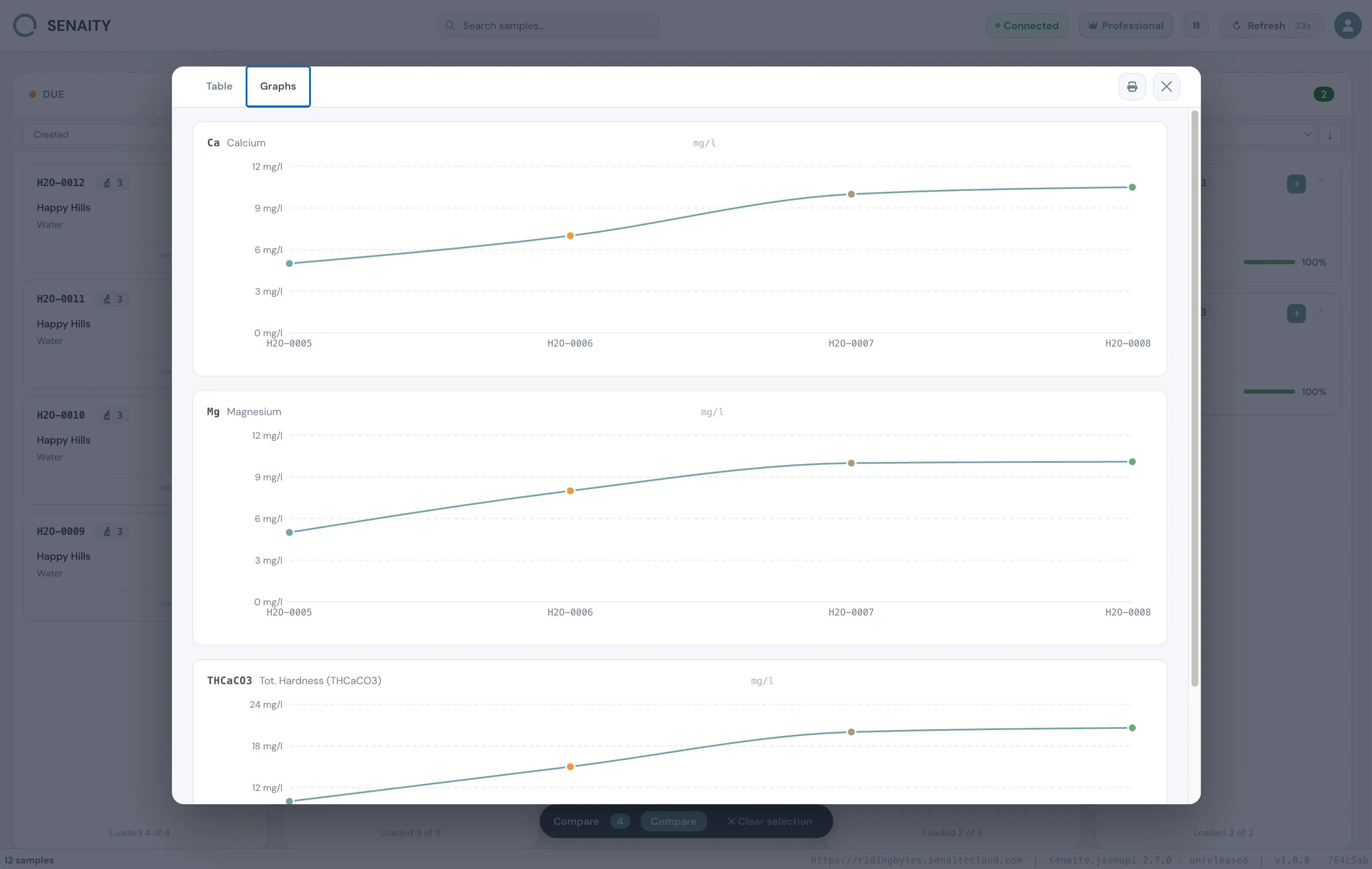
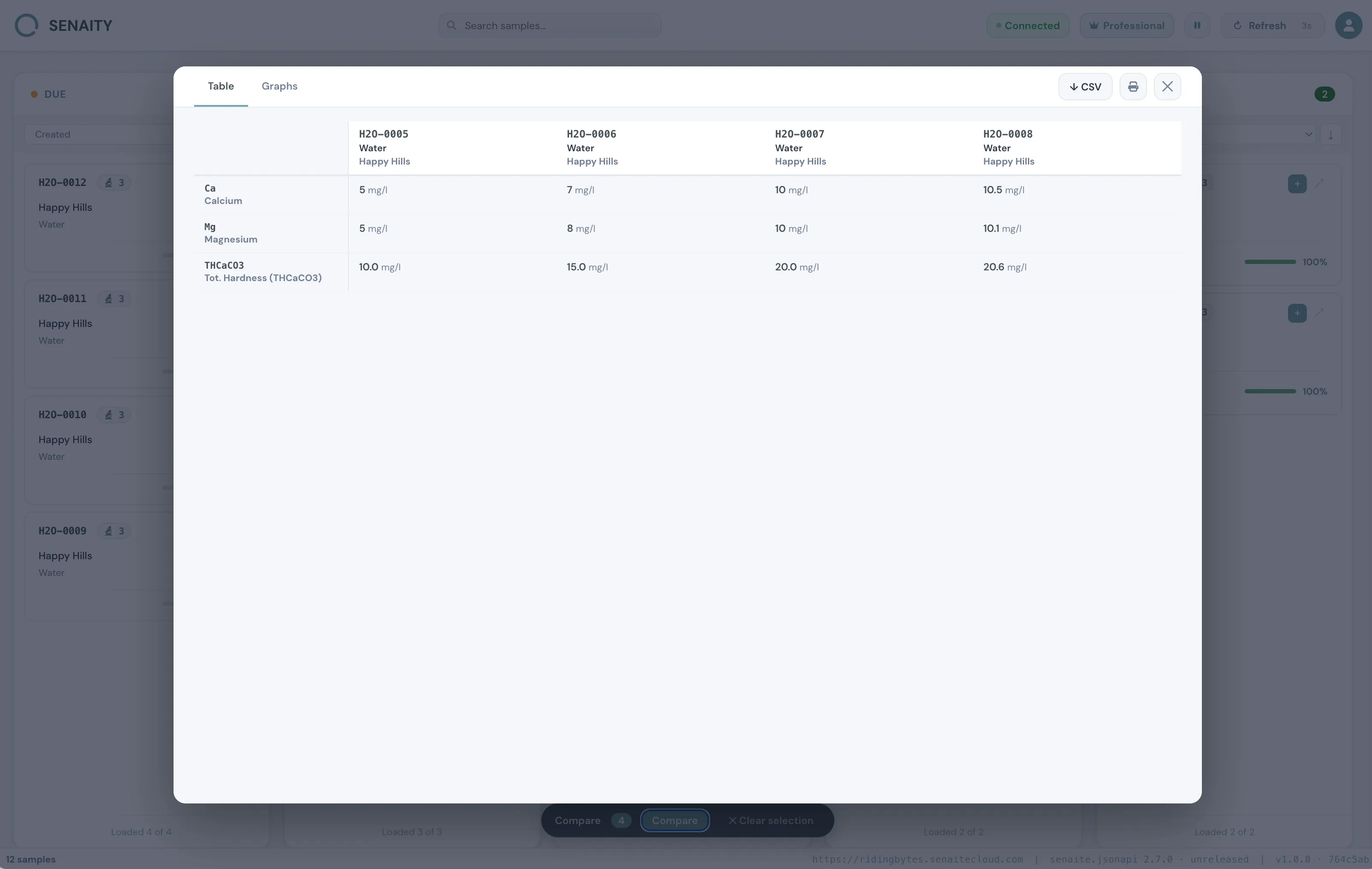
- Sample comparison. Two or more samples side by side, with relative standard deviation, Z-scores and distribution plots, exportable as a spreadsheet.
Why we changed course
SENAITY ran as a hosted service that logged into the labs’ SENAITE installations from outside. The hosted demo found too little use to keep running. For a lab’s IT and data protection, a service inside the lab’s own network is the easier path, so the successor runs there. It also starts with the figures labs assemble by hand across many results: turnaround times, instrument load, how often a parameter fails its specification.
What continues
SENAITE Data Lens answers those questions and runs where the data already is. A small SENAITE add-on writes every saved analysis into a PostgreSQL database next to your SENAITE, and dashboards in Metabase sit on top. The stack runs on your own infrastructure, nothing is sent out, and your IT can query the same table with Excel, Power BI or any SQL client.
The anomaly detection from SENAITY is planned as a later extension of Data Lens. Data Lens is currently in its pilot phase: we set it up on a copy of a lab’s data and build the first dashboards together with the lab.
If you had a SENAITY account
SENAITY stored your account details, API keys and the address and encrypted login of the SENAITE sites you connected, never your samples or results. All of it is deleted when the service shuts down. As a precaution, change the password of the SENAITE user you connected.
If you would like to take part in the Data Lens pilot, or tell us which figure you assemble by hand every month, get in touch.